CORE analysis supports major investments in Portland’s Medicaid behavioral health space

- An analysis by Providence CORE is helping Oregon's largest Medicaid CCO shape major investments in services for members with high behavioral health needs.
- This work has helped inform decisions by Health Share of Oregon to invest more than $7.6 million over two years in interventions to support a cohort of high-risk members.
In 2024, Health Share of Oregon shared findings from an eye-opening data analysis by our team at the Providence Center for Outcomes Research & Education (CORE). The analysis revealed important insights into local behavioral health needs and care patterns for people experiencing substance use disorders and mental health crises.
Now, that data and ongoing monitoring are helping Health Share shape major investments in services for members with high behavioral health needs.
About the data: What we found
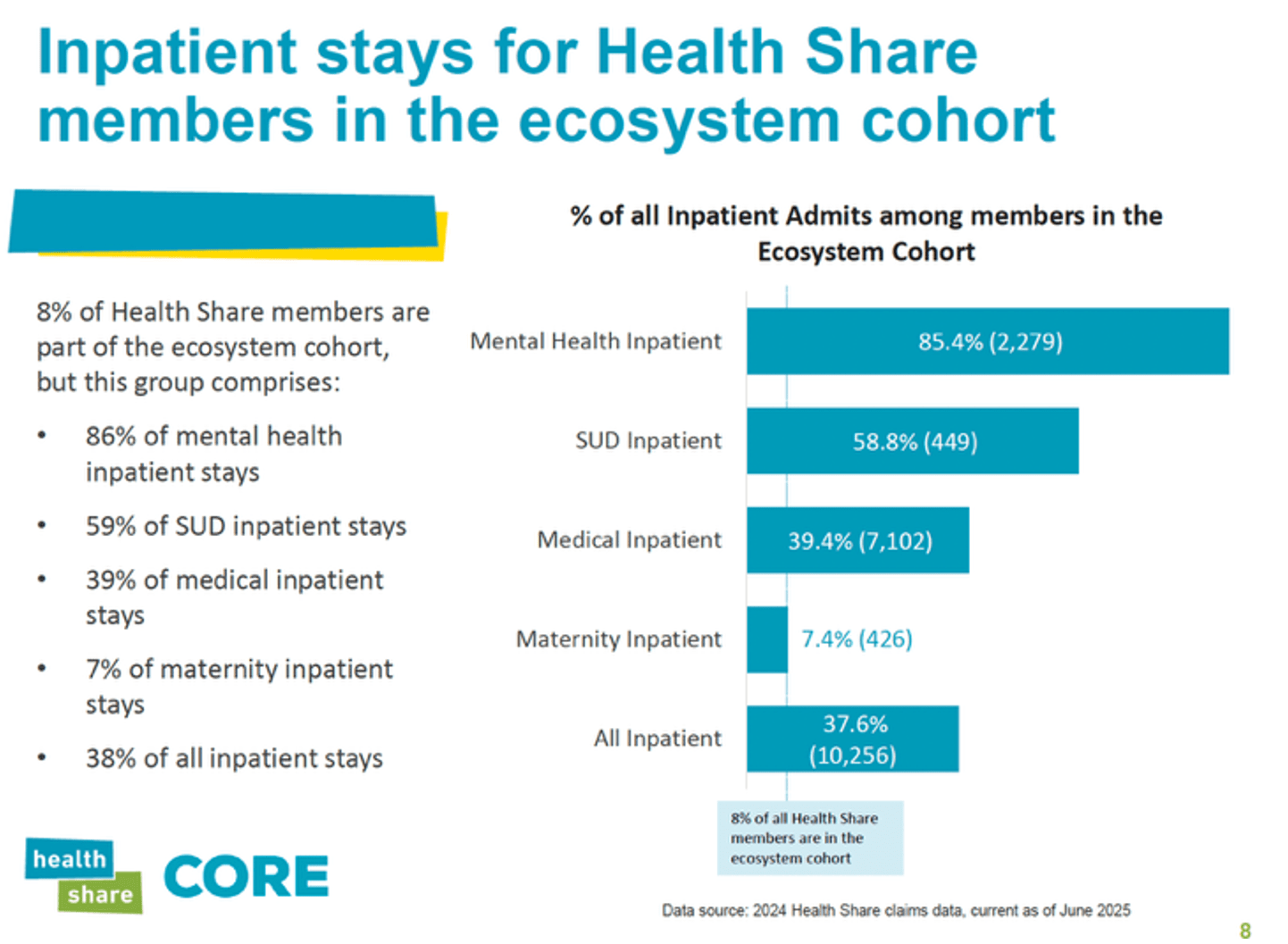
CORE’s analysis of Health Share and Medicaid claims data found that in 2023, a relatively small number of members—8 percent—accounted for 38 percent of adult inpatient admissions. These members faced serious challenges, including substance use disorders, mental health crises, and housing insecurity. They were also high users of high-cost acute care, like emergency department (ED) visits and hospital stays.
Oregon’s largest Medicaid coordinated care organization has since budgeted $7.6 million over two years for programs and interventions to support these high-risk members.
From data to action: New programs and interventions
"CORE's analysis was critical to informing our development of a system of interventions for some of our most vulnerable members." - Cat Livingston, MD, MPH, Medical Director, Health Share of Oregon.
Many of Health Share’s new or expanded investments aim to meet these members’ needs before they end up in the ED or hospital. Others strengthen training and resources for the providers who work most closely with these members.
For example, an analysis of claims data showed that infections were a common issue for this group. While this trend is well known to local providers, this data gave Health Share the evidence needed to make the case for supporting a Wound Care Initiative run by local county health departments. By investing in staff and outpatient resources for wound management, Health Share seeks to reduce preventable ED and hospital visits.
Another example is Health Share’s support of the Community Health Access and Treat (CHAT) program. This dispatch and response unit, run by Portland Fire & Rescue, focuses on non-urgent 911 calls. Through triage and case management, they work to reduce ambulance transport and ED visits.
Other focus areas include peer support and outreach efforts and increasing the number of addiction physicians and peers in inpatient care settings.
“Analyses like those produced through our partnership with Health Share of Oregon are vital to shaping and sustaining healthier programs and communities,” explains Megan Holtorf, manager of analytics business intelligence at CORE. “We’re proud to see CORE’s work contribute to major behavioral health investments designed to improve lives across our region.”
As these programs continue to grow, CORE looks forward to working with Health Share to evaluate their impact and continuing to improve care and outcomes for local communities.
Related CORE news
- CORE study offers new data on Medicaid health-related housing benefits
- CORE launches multi-year evaluation of Oregon’s Medicaid demonstration waiver
- CORE data analysis supports change in Portland's behavioral health landscape