Innovative Recreation Therapy at PACE Tanasbourne
Adaptive Gaming That Builds Connection and Cognitive Health
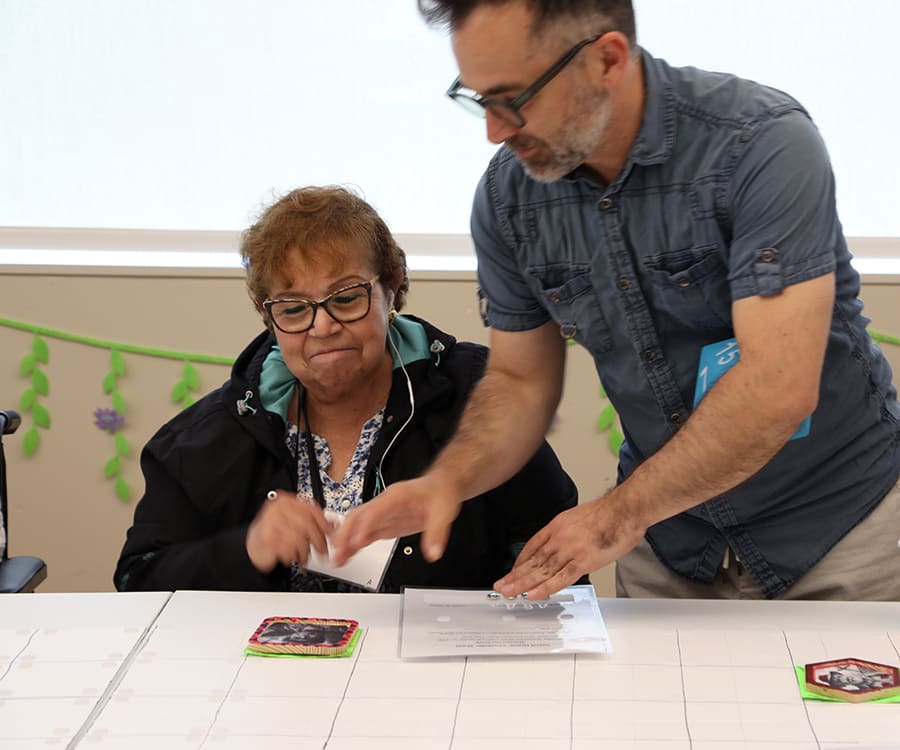 At Providence PACE Tanasbourne, something exciting is happening around the game table. Every week, a group of PACE Participants gather—not just to play, but to connect, imagine, and heal. The game they play—designed by Matthew Gailey, a PACE Life Enrichment Coordinator currently working towards certification as a Recreation Therapist—isn’t your typical board game. It’s an adaptive tabletop role-playing game. And while the laughter and storytelling might sound like simple fun, it’s actually therapy in action.
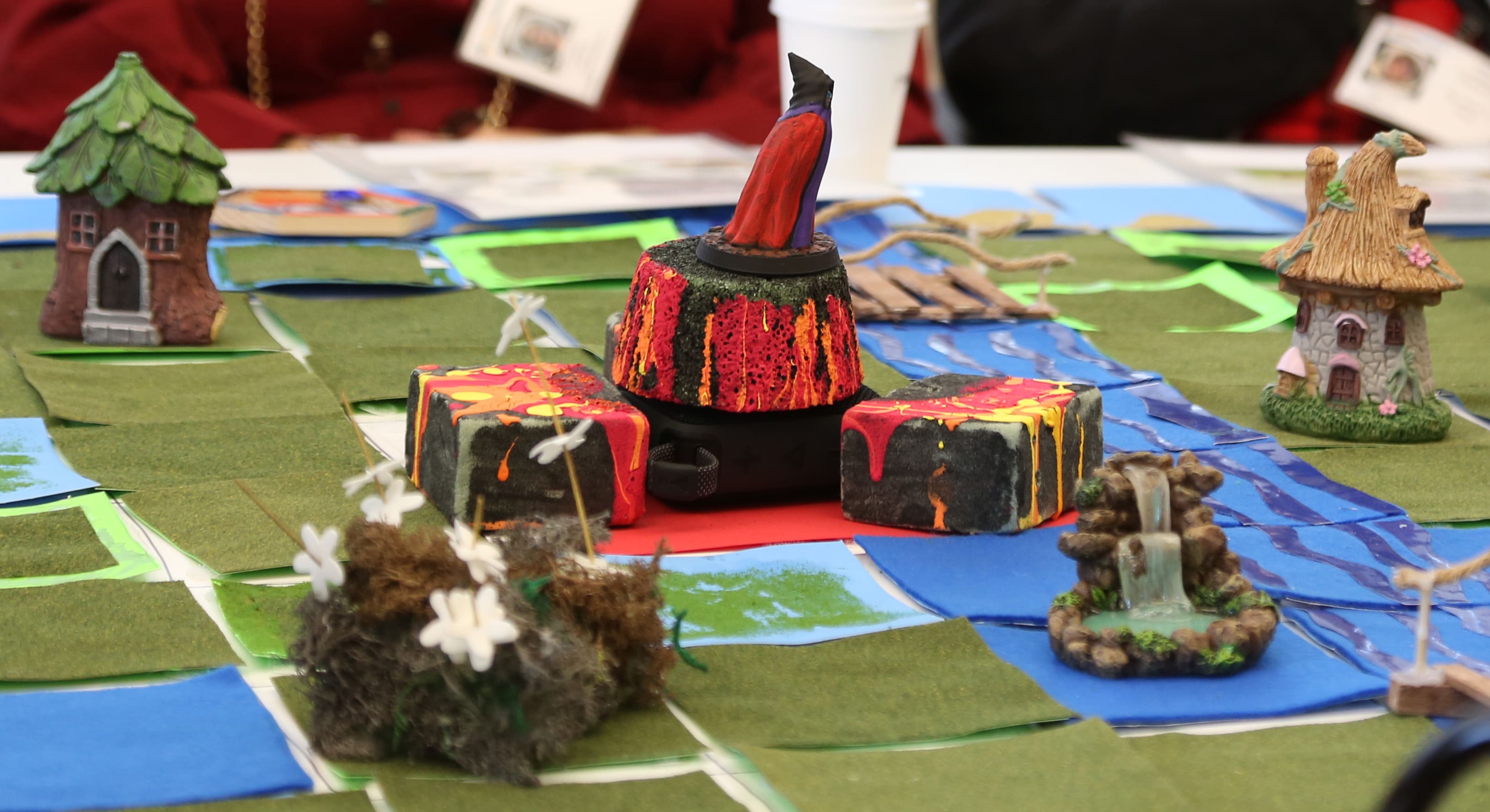
The game is played on a giant 6’x4’ grid-like tabletop board with oversized spaces and featuring a jungle island theme. Giant foam dice, large player tokens, and audio sound effects provide tactile and sensory feedback. Letter-sized laminated character sheets with Velcro adhesive strips help players manipulate game items and keep track of their progress.
The game’s theme is survival and collaboration. Shipwrecked characters must cooperate to overcome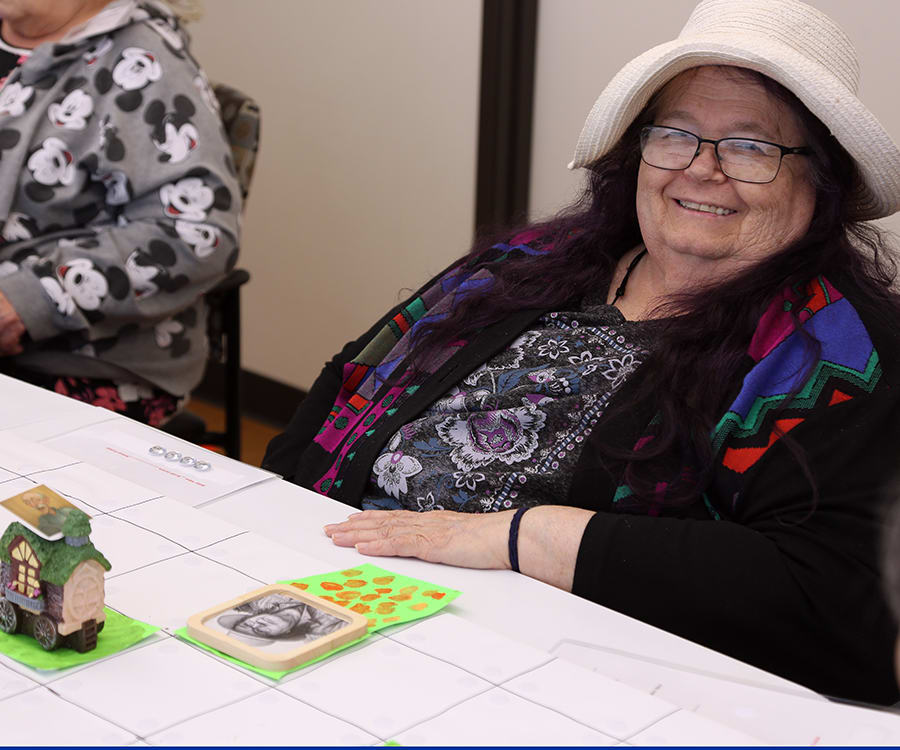 island dangers, gather vital supplies, even uncover hidden treasures, while navigating to a rescue point. Participants create fictional game characters and assign them unique characteristics that can help the group survive. Players are encouraged to contribute to story ideas as they play together, creating a shared group narrative with lots of discussion and laughs along the way. Even participants who don't want to play can have a role as prop builders constructing or painting game set pieces. The idea is that there is a place for everyone, regardless of how they choose to engage.
Adaptive gaming is built on evidence-based recreational therapy principles, targeting cognitive skills like memory, sequencing, and spatial reasoning. But the benefits go beyond brain work. Staff have noticed improved mood, increased confidence, teamwork, and a sense of community among players. There’s even an online version of the game, reaching participants from different sites, some of whom are unable to leave their homes. It’s a strong example of how Recreational Therapy moves far beyond “keeping people busy” and creates meaningful, measurable improvements in quality of life.
############
Using evidence-based and person-centered approaches, the PACE Life Enrichment team supports physical health, recovery, and well-being. By providing meaningful activities and socialization, they build on each participant’s strengths and interests to weave laughter, joy, and creativity into their lives.