Breast Cancer Care at Providence Saint Joseph Medical Center
When you’re our patient, we don’t just treat your breast cancer – we treat you. You receive whole-person care for your body, mind and spirit. Our Breast Health Center offers compassionate, expert care under one roof. This care includes same- or next-day appointments for patients with breast pain, lumps or masses.
For mammograms and other imaging appointments: 818-847-3550
For urgent breast concerns: 818-847-3781
Breast Cancer Care at Providence Saint Joseph Medical Center
When you’re our patient, we don’t just treat your breast cancer – we treat you. You receive whole-person care for your body, mind and spirit. Our Breast Health Center offers compassionate, expert care under one roof. This care includes same- or next-day appointments for patients with breast pain, lumps or masses.
For mammograms and other imaging appointments: 818-847-3550
For urgent breast concerns: 818-847-3781
Breast Cancer Conditions We Treat
Breast cancer is cancer that forms in the cells of breast tissue. It’s more common in women, but men can get breast cancer too.
Our expert oncology team uses the most effective, leading-edge therapies to treat patients with breast cancer and its related conditions, including:
- Breast cysts
- Breast infections
- Ductal cancers
- Gynecomastia
- In situ breast cancer
- Lobular cancers
- Male breast cancer
- Metastatic cancers
- Nipple discharge
Testing & Diagnostics
Our breast cancer specialists use advanced testing and diagnostic tools to accurately identify the type, stage and unique characteristics of your breast cancer.
Your care team could use several different tools and procedures to help determine your treatment plan.
A breast MRI uses non-radioactive contrast dye and a powerful magnetic field to produce high-resolution images of breast tissue. It helps evaluate abnormalities, such as lumps or other changes in breast tissue, that were found through a physical exam or a mammogram.
A breast ultrasound uses high-frequency sound waves to produce detailed images of the inside of the breast. It’s non-invasive, radiation-free and provides real-time imaging to help accurately diagnose abnormalities found through a physical exam or a mammogram, such as lumps or other changes in breast tissue.
Genetic tests, also known as genetic screenings, DNA tests or chromosomal tests, can help determine your risk of developing certain cancers, especially if you have a family history of cancer. We offer treatment, management and prevention plans that are personalized to your unique genetic profile.
HER2/neu is a protein that can make some cancer cells grow faster. In some cancers, especially breast cancer, high levels of HER2/neu mean that the disease could be more aggressive and more likely to come back after treatment. Testing for HER2/neu helps us guide you towards the most effective treatment decisions.
In this test, we check for the presence of estrogen and progesterone receptors on the surface of breast cancer cells. If the receptors are present, your cancer is likely to respond to hormonal therapies, which block the cancer from using these hormones to grow. This crucial information can help tailor your treatment plans.
Mammograms are one of the most important tools doctors have in breast cancer prevention and early detection. Our services also include 3D mammography, which is similar to getting a standard 2D mammogram, except that the X-ray takes more images and combines them to create a clearer, three-dimensional view of the breast.
Personalized Treatment for Breast Cancer
The Breast Center at Disney Family Cancer Center offers a wide range of advanced treatment options for our breast cancer patients, from diagnosis to post-treatment support. But your care begins well before treatment. We take care of you as soon as you walk through our doors. Your multidisciplinary care team works with you to design an individualized care plan, which may include one or more of the following:
Medical oncology uses systemic therapies that travel through the bloodstream to treat cancer that has spread to other areas of the body or has a high risk of spreading. Sophisticated genetic analysis allows some of these therapies to target specific DNA mutations that cause cancer cells to develop and grow.
Systematic therapies include:
- Chemotherapy
- Hormone therapy
- Immunotherapy
- Molecularly targeted therapy
We also offer new and innovative treatment options through clinical trial opportunities. These trials use new drugs or drug combinations within a specific clinical situation.
Surgical therapies involve an operation or procedure to remove cancer from the body. Surgery may be the main treatment for some invasive cancers, but it’s only one part of the entire treatment plan.
Surgical therapies include:
- Advanced axillary surgery techniques
- Aesthetic flat closure mastectomy
- Axillary lymph node dissection
- Excisional breast biopsy
- Excisional breast biopsy using targeted localization techniques
- Lumpectomy
- Mastectomy with immediate reconstruction
- Nipple-sparing mastectomy
- Oncoplastic surgery, hidden scar breast cancer surgery
- Risk-reducing mastectomy
- Sentinel lymph node mapping and biopsy
- Skin-sparing mastectomy
- Total mastectomy
Radiation therapy uses high-energy radiation from a source like X-rays or photons to kill cancer cells or shrink tumors. Sometimes it’s part of a treatment plan that also includes systemic therapies and/or surgery. Radiation can be used to help ease a patient’s pain or discomfort.
Radiation therapies include:
- Active Breathing Coordinator™ (ABC)
- Accelerated partial breast irradiation (APBI)
- Hypofractionated whole breast radiation therapy
- Intraoperative radiation therapy (IORT)
- Stereotactic radiosurgery (SRS)
- Three-dimensional conformal radiation therapy (3DCRT)
Part of treating your illness means supporting and empowering you as a whole person – body, mind and spirit. We provide you with a wide range of support services beyond conventional treatment to help you and your loved ones through your treatment journey as comfortably as possible. Depending on your personal needs, this may include one or more of the following:
- Acupressure
- Acupuncture
- Art journaling
- Beauty Bus partnership for haircuts, wigs and more
- Counseling
- Community health center partnerships
- Genetic counseling
- Hypnotherapy
- Integrative medicine
- Lymphedema services
- Massage therapy
- Nurse navigation
- Nutrition services
- On-demand video chat care with partner One Medical
- Online patient education
- Outpatient centers
- Palliative care
- Personal appearance center
- Qigong
- Research trials
- Sound healing
- Support groups
- Survivorship programs
- Women’s health services
- Yoga
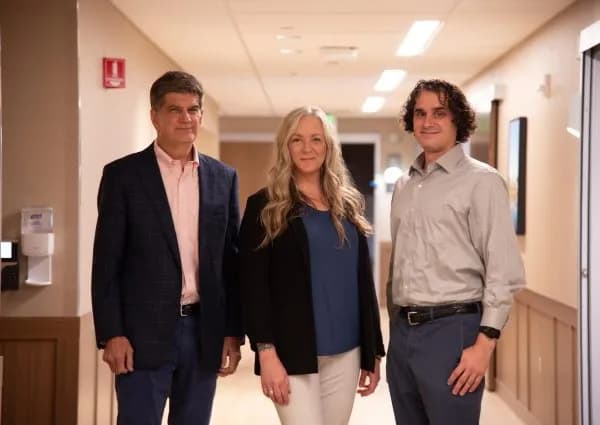
Meet the Team
Get access to our vast network of dedicated and compassionate providers who offer personalized care by focusing on treatment, prevention and health education.

Why Choose Us for Your Breast Cancer Care?
As our patient, you have access to the best specialists and a full range of support services for you and your loved ones, all under one roof. We’re able to minimize the time between your diagnosis and treatment with coordinated, whole-person care that always puts you first.

Awards and Accreditations
We are proud to see our dedication to our patients recognized by the most well-respected programs and institutions in the United States. Providence Saint Joseph Medical Center has achieved the following recognitions:
- Breast Health Center Accreditation – American College of Radiology (ACR)
- Breast Imaging Center of Excellence – American College of Radiology (ACR)
- Commission on Cancer (CoC) Accreditation – American College of Surgeons (ACS)
- Accreditation – Association of Community Cancer Centers (ACCC)
Innovation Meets Exceptional Cancer Care in Los Angeles County
The cancer experts at the Roy and Patricia Disney Family Cancer Center are here for you. From the moment you step through our doors, you’re supported by a team dedicated to your wellbeing, and we’ll be here to guide you every step of the way.

Part of the Providence Cancer Institute in Los Angeles
Our patients are the center of everything we do:
- Our unique patient navigator program offers navigators specific to each cancer type to assist you throughout your cancer journey.
- Our beautiful, modern hospitals are equipped with the latest technologies.
- We also offer robust research labs not found in local, community-focused hospitals.
Learn more about the Providence Cancer Institute in Los Angeles
Find Clinical Trials
Are you looking for a clinical trial for yourself or for a patient? We’d love to help you find one!

Frequently Asked Questions
In the very earliest stages, breast cancer has no outward symptoms. Sometimes the earliest sign is a tiny lump, or mass, that’s only detectable on a mammogram. As the disease progresses, however, more noticeable changes might appear. These can vary widely – while a lump is the most common symptom, it’s by no means the only one.
Any of the following changes could be a warning sign of breast cancer:
- Bloody nipple discharge or unilateral discharge other than breast milk
- Dimpling, puckering, irritation or scaliness of the breast skin or nipple
- Lump in the breast or armpit area
- Nipple that turns inward, flattens out, pulls to one side or changes direction
- Pain or tenderness in the breast or nipple
- Swelling in all or part of the breast
- Thickening or redness of the breast skin
These symptoms may be signs of breast cancer in men as well as women.
If you notice a potential symptom of breast cancer, or if you’re concerned about any changes in the way one of your breasts looks or feels, please call your primary care provider or a breast care specialist.
While these symptoms don’t always indicate cancer and can sometimes be signs of something less serious, such as a cyst or an infection, it’s important to have a physician evaluate them right away. Don’t wait to see if they go away on their own.
Treating breast cancer successfully is much easier when it’s caught and treated early.
Yes, we encourage your family members and loved ones to be involved in your care and know as much about your treatment plan as possible.
A pathology report explains details like the type, size and stage of your cancer based on lab results. If you're feeling unsure about your pathology report, our team is here to help.
Treatment timelines vary depending on your diagnosis and the type and stage of your cancer.
Medical oncology and radiation treatments typically involve multiple treatment sessions over a period of days or weeks. Your care team reviews your treatment plan with you, as well as any options that may impact length, frequency and duration of treatment.
Some surgical procedures are done on an outpatient basis. More complex cases may require a hospital stay.
Following active treatment, you will see your physician periodically to monitor for any signs of recurrence.
An oncology nurse navigator is a nurse or registered clinician who personally guides you from diagnosis through survivorship. They are your advocate, here to provide support and reassurance tailored to your needs – whether that's occasional conversations or daily check-ins.
Your navigator can coordinate your appointments, speak directly with your primary care physician, provide support to lower your stress, talk to your loved ones and help you access all the resources that you need.
Yes, our support services include financial navigation to help ease your way through financial concerns and barriers.
Our staff can help you:
- Evaluate insurance health plans to ensure the right choices are made for your care
- Leverage available programs and services, such as co-pay assistance and patient assistance programs to help reduce financial barriers
- Optimize external assistance programs, such as patient financial support programs
Your oncology nurse navigator can refer you to a social worker, who can connect you with financial support as needed.